

Game / Simulation
Pedagogy Alignment:
Collaborative and interactive learning
Faculty Lead(s):
Assistant Professor Nona Pepito
Tool Description
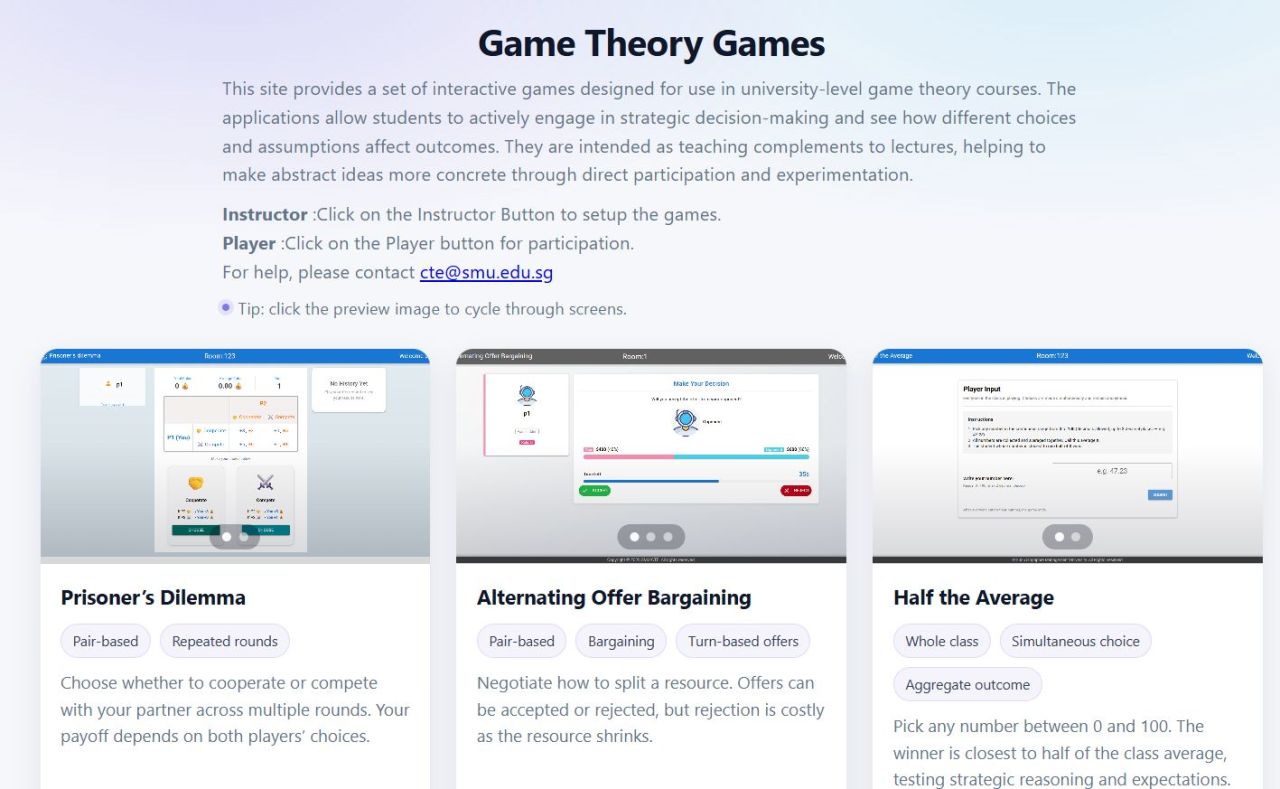
Game Theory Games is a custom web-based platform designed to support the teaching and learning of game theory through interactive gameplay. The platform hosts a suite of digital games that translate abstract theoretical concepts into applied, experiential learning activities.
Game Theory Games provides an engaging and interactive learning experience for students, allowing them to participate in strategic decision-making scenarios and observe how outcomes unfold in real time.
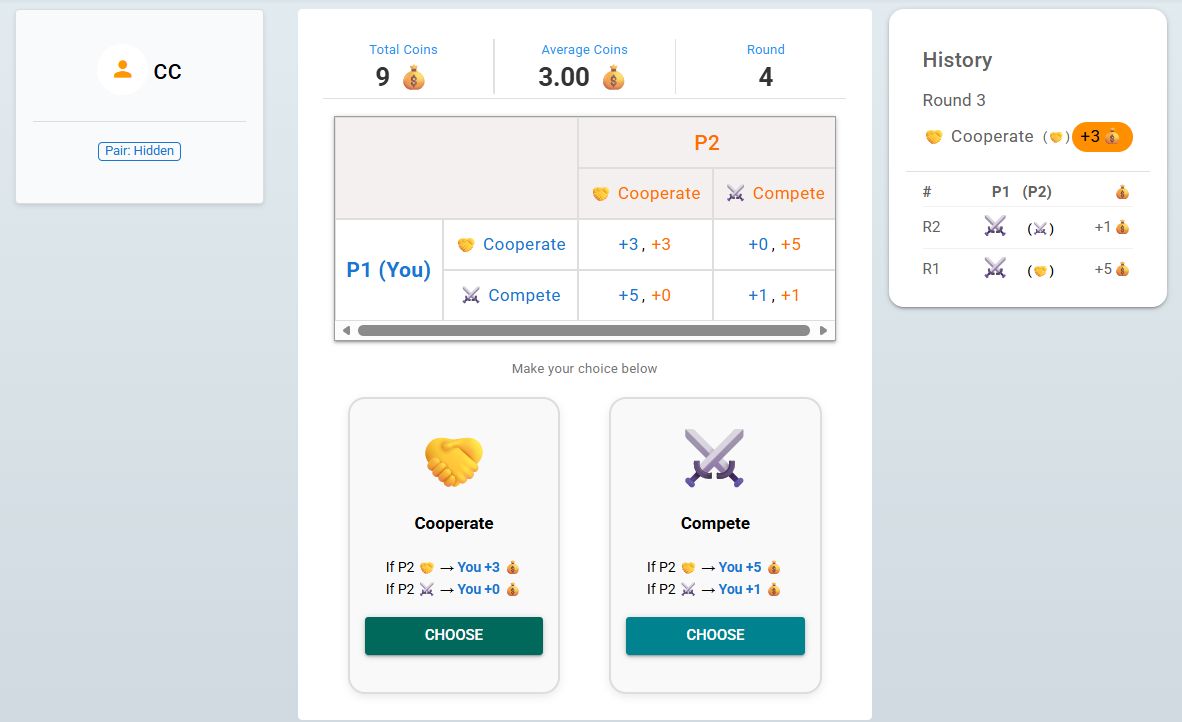
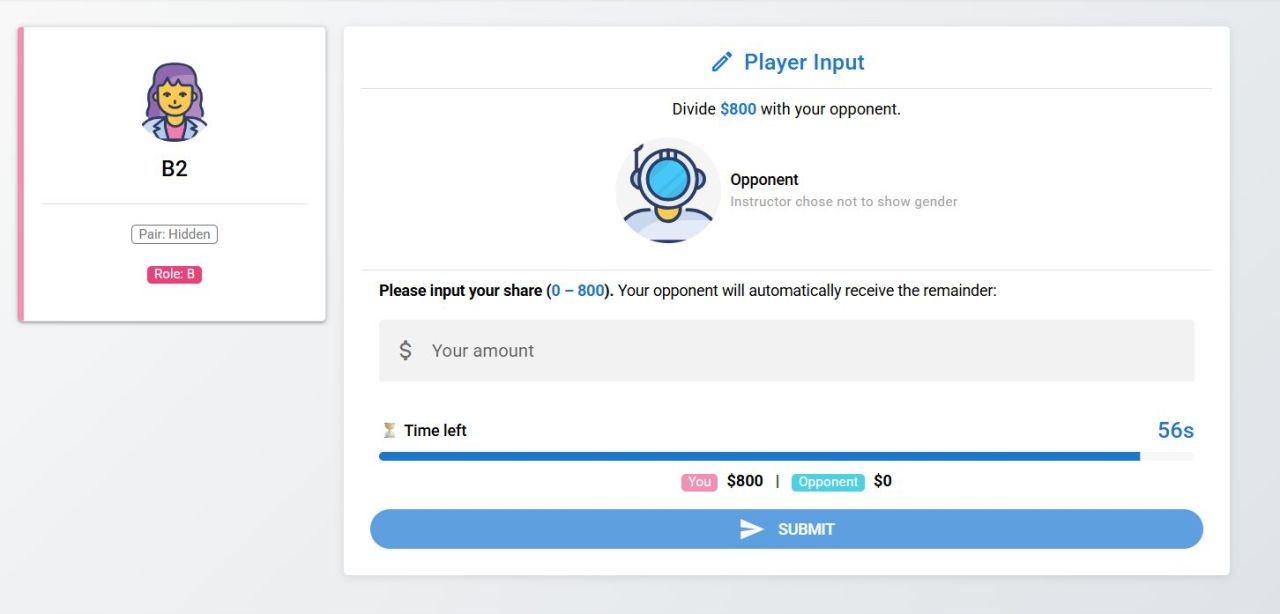
The platform currently includes four core games: Prisoner’s Dilemma, Alternating Offers Bargaining Game, Investment Game, and Average Game. These games are played among students, enabling peer interaction and the exploration of strategic behaviour in a live environment.
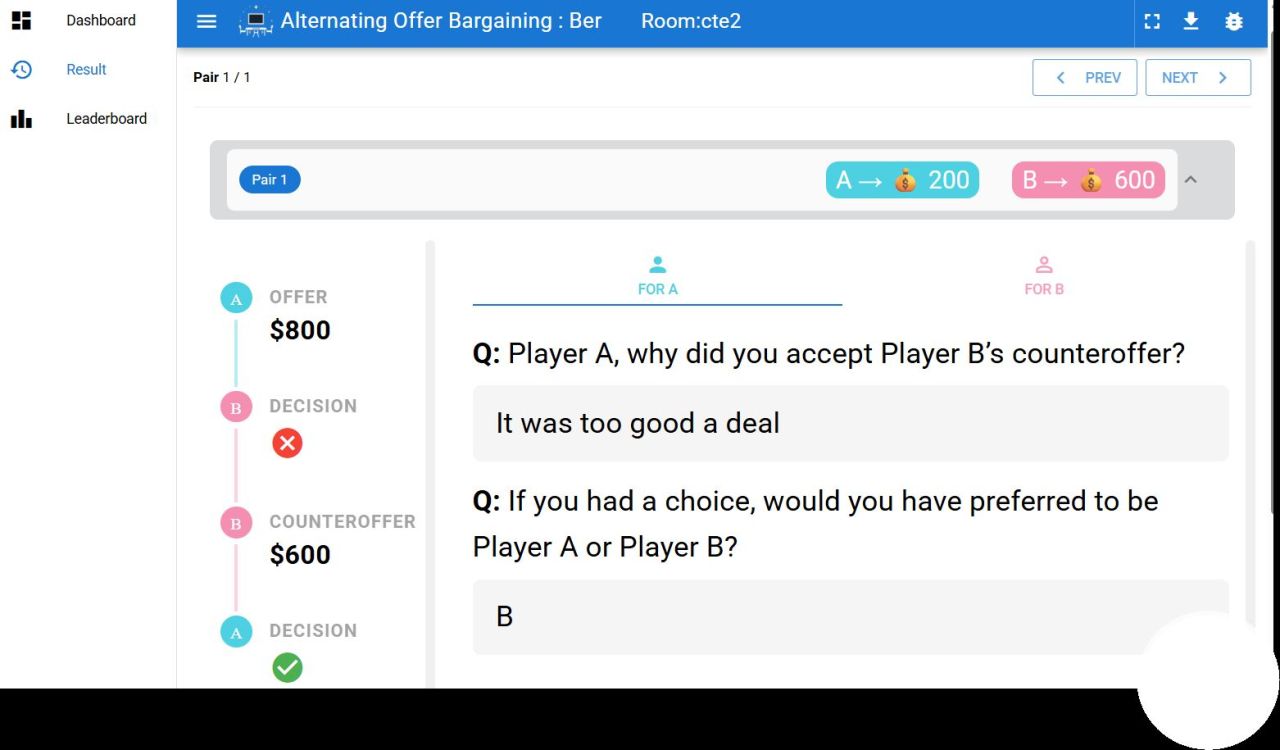
Game Theory Games also equips instructors with tools to track and analyse gameplay results, providing insights into student understanding and enabling more targeted feedback and discussion.
Game Theory Games seeks to address the following learning objectives:
Students will be able to:
- Describe key concepts in game theory, including strategic interaction and equilibrium outcomes.
- Apply theoretical models to practical, real-world scenarios.
- Analyse how actual behaviour may diverge from standard theoretical assumptions.
- Develop and evaluate strategies based on the actions of others.
- Reflect on the outcomes of games and relate them back to underlying concepts.
Teaching Strategy
The games are typically played in class, with students participating individually or in pairs through the platform. The set up for a session is as follows:
- The instructor introduces the relevant game and its connection to course concepts.
- Students participate in the game through the platform, making decisions in real time against their peers.
- The platform captures and aggregates results, which are then used to facilitate class discussion and analysis.
- The instructor leads a debrief to connect observed behaviours and outcomes back to game theory concepts.