

Digital Technologies for Environmental Sustainability
Completed
Academic Lead
Kiruthika RAMANATHAN
Senior Lecturer of Information Systems; Director, MITB (Digital Transformation) Programme
SCIS
Industry
CoffeeBot (Malaysia)
A smart vending company operating automated coffee machines that serve freshly brewed coffee with a simple touch, available 24 hours a day.
Why this Collaboration
Digital technologies are increasingly used to address environmental challenges, but their impact depends on how they are designed, deployed and managed. Through a series of interviews with CoffeeBot's CEO, students examine real-world decisions involving data, automation and digital systems, and consider the trade-offs between efficiency, business value and sustainability outcomes. The interviews are released progressively throughout the course, helping students connect each week's concepts to an evolving industry case.
Industry Involvement
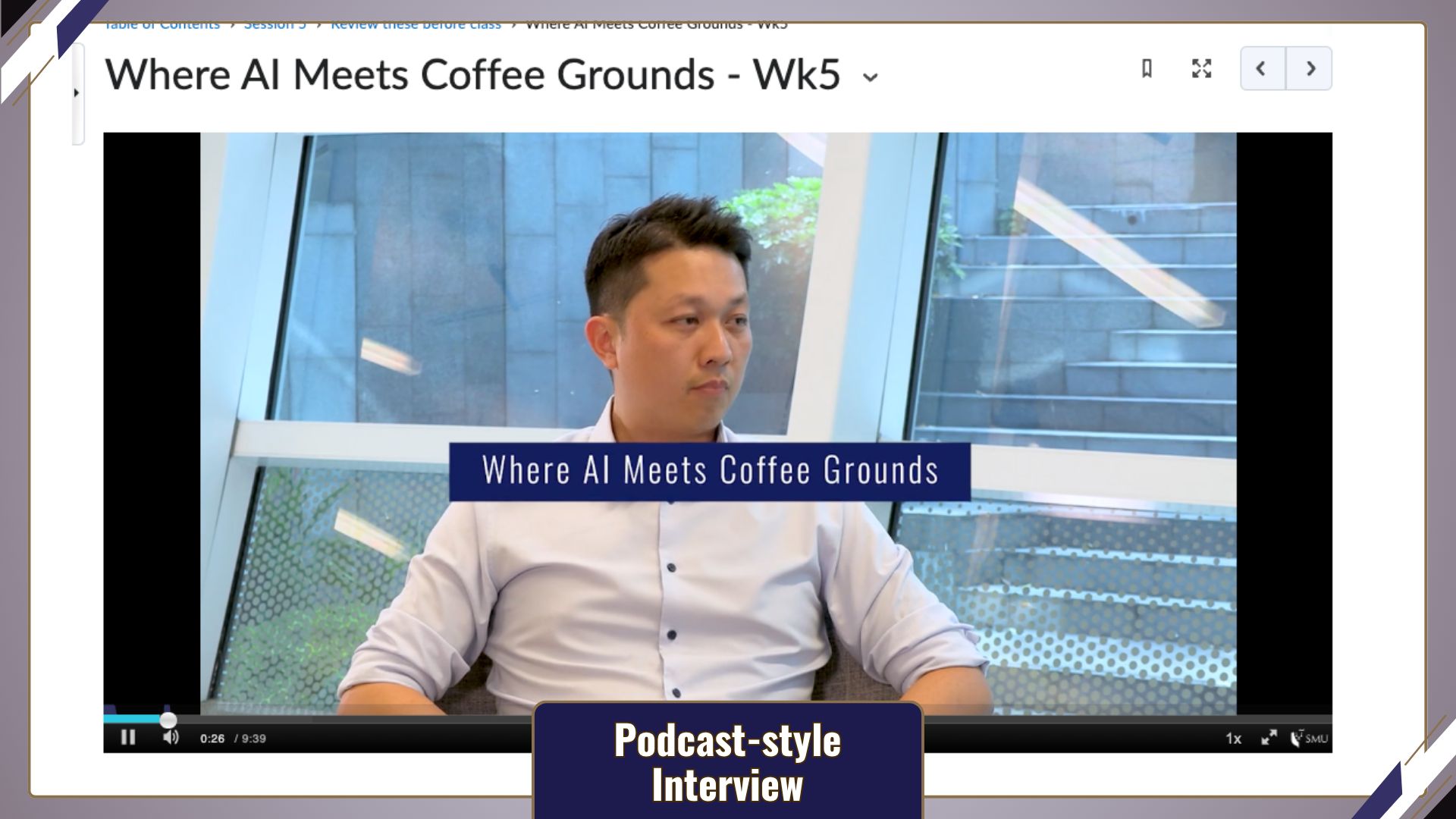
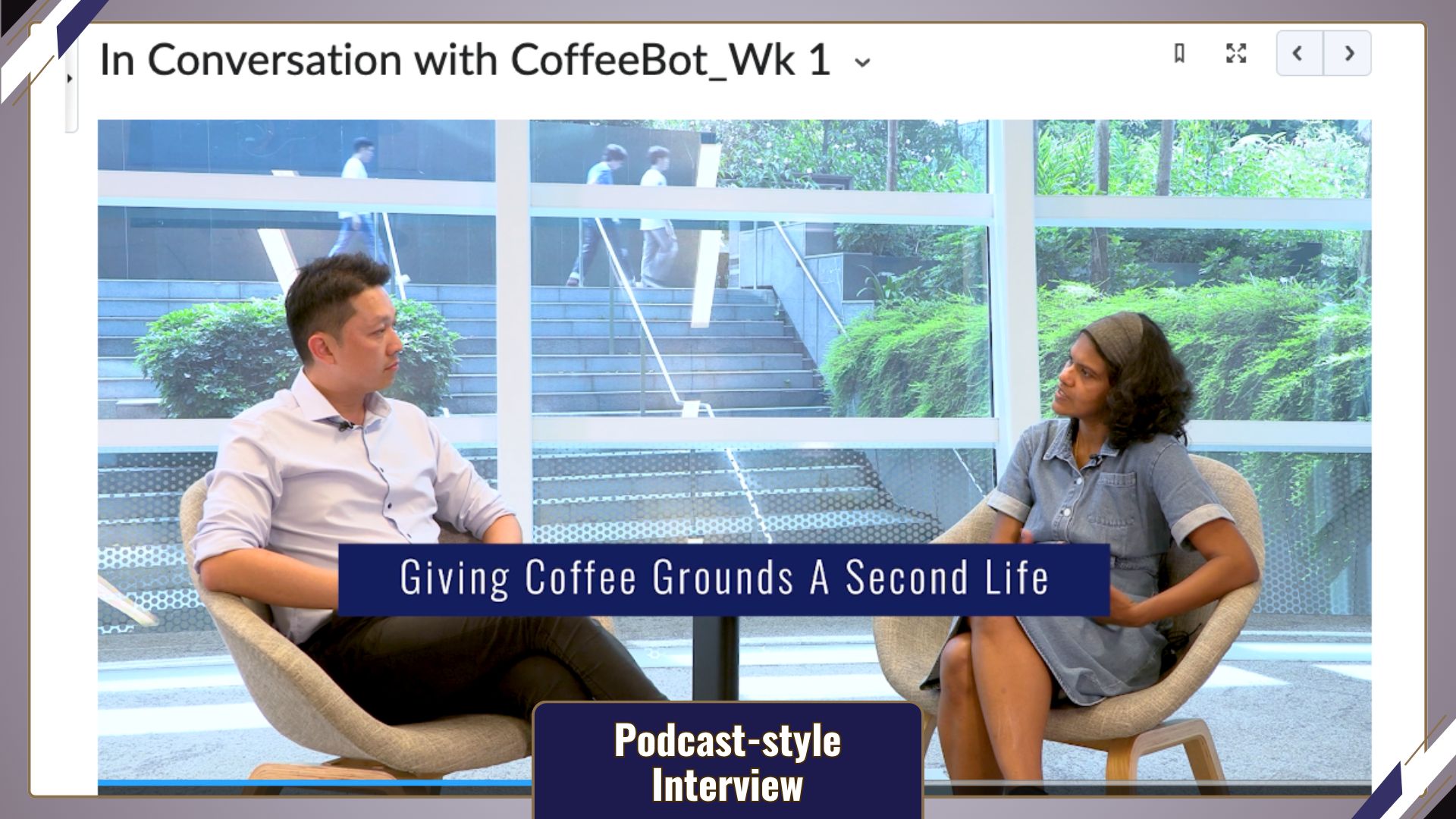
CoffeeBot's CEO was interviewed on the rationale behind the CoffeeBot project, with the conversation split into four parts released weekly to match the course's progression. Faculty and, at points, other CoffeeBot team members joined in-class sessions directly, keeping the partnership active beyond the recorded videos.
Student Learning Experience
This is a blended learning experience built for SMU-X students.
Students explore environmental sustainability through the lens of a real technology-enabled business. Throughout the course, they follow CoffeeBot's journey and examine how digital technologies influence operational efficiency, resource consumption, customer behaviour and sustainability outcomes.
Before class
Students engage with curated readings, videos and learning materials that introduce the week's sustainability and technology concepts.
CoffeeBot Industry Insights
Students view regular interview segments with CoffeeBot's CEO, gaining insight into real-world decisions involving automation, data, digital platforms and business operations. Each segment provides context for analysing the opportunities and trade-offs associated with using technology to support sustainability goals.
In class
Students participate in discussions and hands-on activities that apply course concepts to the CoffeeBot case and other real-world sustainability challenges. Working individually and in teams, they evaluate technologies, assess impacts and develop recommendations grounded in both business and environmental considerations.
AI-supported learning
Students have access to AI learning assistants that provide additional support as they navigate course materials, explore ideas and complete course assignments
In Their Own Words
Faculty
"My goal was for students to look beyond whether technology is innovative and ask whether it creates meaningful sustainability outcomes. The CoffeeBot case gives us a practical way to explore both the benefits and unintended consequences of digital technologies."
- Kiruthika RAMANATHAN
Get involved with i.Connect
Whether you teach at SMU or work in industry, tell us what you have in mind. CTE will explore what could fit and follow up with you.